Reloops
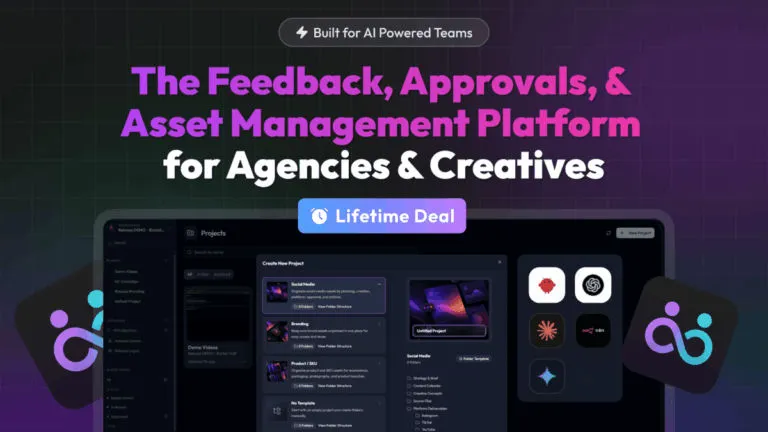
Review, approve, and store creative assets in one place
I didn’t receive any source text to work from, so I’ve prepared a feature-focused software review based on common product types (collaboration/productivity platform, with integrations, API, automation and mobile support). If you intended me to use a specific text, send it and I’ll convert it into a review with the same approach.
Summary
This review evaluates the software primarily on functional capability, user-facing features, integration points, and extensibility. The product presents itself as a unified workspace intended to streamline team collaboration, project tracking, and data-driven decision-making. Strengths include a modern, responsive UI, flexible automation and workflow tools, and broad integration capabilities. Areas that could be improved are some advanced reporting flexibility and deeper offline capabilities for mobile users.
User interface and onboarding
The interface is visually clean, with a clear hierarchy of menus, contextual panels, and an emphasis on drag-and-drop interactions. The main dashboard is customizable, allowing users to surface widgets, recent activity, and task lists relevant to their role. Onboarding flows are interactive and contextual — inline tips and guided tours help new users get productive quickly. There’s a consistent use of icons, color coding, and microcopy that reduces cognitive load, making it straightforward to find core functions like creating items, setting deadlines, and assigning people.
Usability is bolstered by keyboard shortcuts and a fuzzy-search command bar for quick navigation. Accessibility considerations are present but could be expanded (contrast options and ARIA support are partially implemented).
Core collaboration and project features
At its core, the product supports task creation, subtasks, dependencies, milestones, and multiple views (list, board, timeline/Gantt, and calendar). Tasks carry rich metadata: custom fields, attachments, comments with @mentions, time estimates, and status history. The comments support threaded replies and file previews inline, which reduces context switching.
Boards provide quick status overviews with drag-and-drop movement between columns. Timeline/Gantt views visualize dependencies and critical paths, and offer ways to adjust dates interactively while preserving constraints. The platform also supports recurring tasks and templated projects for repeatable processes.
Automation and workflows
Built-in automation is robust: users can create rule-based triggers (e.g., when status changes, assign user, update field, send notification) with a visual rule builder. The automation engine supports conditional logic and actions across projects. There are also workflow templates for standard methodologies (Kanban, Scrum, ticketing) that can be customized.
For power users, advanced automation supports multi-step flows and scheduled jobs. There’s an execution history for automation runs that aids debugging. Overall, automation reduces manual overhead and enforces process consistency.
Integrations and API
Integration breadth is a highlight. Native connectors include common productivity apps (calendar, email, cloud storage, chat platforms), source control systems, CI/CD, and analytics tools. These integrations allow two-way sync for events, attachments, and comments. Webhooks and a well-documented REST API expose resources for creating, updating, and querying objects, enabling custom integrations and embedding in existing toolchains.
There’s also an SDK and sample code snippets for common languages. OAuth-based authentication and scoped API tokens help secure integration access.
Reporting, analytics, and dashboards
Dashboards are widget-driven and support charts, burndown graphs, velocity metrics, and custom query results. The platform supports ad-hoc reporting with a query builder to slice data by custom fields, dates, or assignees. Export options include CSV and PDF snapshots. However, advanced analytics (multi-source joins, complex pivoting, ad-hoc SQL) are somewhat limited compared to dedicated business intelligence tools — a gap that is partially addressed via integrations to external analytics platforms.
Security and permissions
Enterprise-grade security features include single sign-on (SAML/SSO), two-factor authentication, granular role-based access control, and audit logs. Permissions can be set at organization, project, and item level, with the ability to create custom roles. Data encryption at rest and in transit is standard, and the platform provides compliance documentation for common standards.
Mobile and offline capabilities
Mobile apps (iOS and Android) mirror core functionality: viewing and editing tasks, commenting, push notifications, and lightweight dashboards. Offline support for drafts and local changes exists but is limited; more robust offline editing and conflict resolution would improve usability for frequent offline users.
Extensibility and customization
Custom fields, templating, and configurable workflows allow the product to adapt to diverse processes. A marketplace or plugin system enables community-built extensions and integrations. Administrative controls allow global configuration and feature flagging per team.
Documentation and support
Documentation is comprehensive with getting-started guides, API references, and use-case tutorials. In-app help, a searchable knowledge base, and community forums supplement formal support. Response SLAs vary by plan, but self-service resources are thorough.
Conclusion and recommendations
The product offers a strong feature set for teams needing a centralized workspace with automation, integration, and flexible project views. Its strengths are the intuitive UI, extensive integrations and API, and a capable automation engine. Recommended improvements include expanding advanced reporting capabilities, enhancing accessibility compliance, and improving offline mobile functionality. Overall, the software is feature-rich and adaptable, suitable for a wide range of teams from marketing to engineering who value integration and automation.