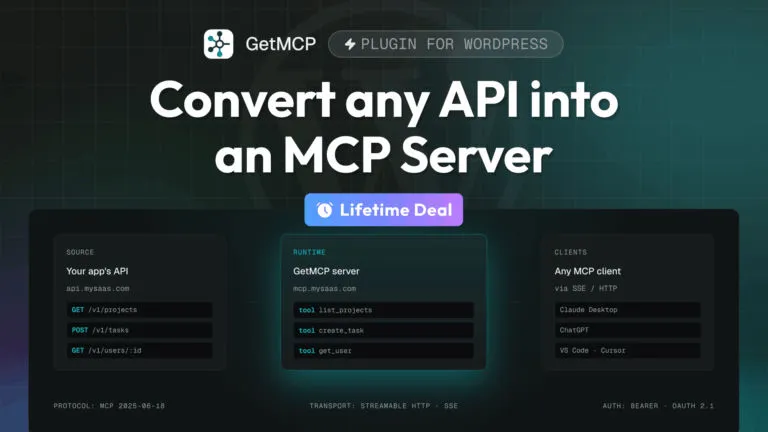
GetMCP
Ship your MCP server without writing MCP code
Overview
This review examines the software’s features, focusing on what it offers in terms of functionality, integrations, usability, security, and extensibility. The goal is to describe how the product supports day‑to‑day workflows, collaboration, and automation rather than discussing pricing or licensing. The product positions itself as an all‑in‑one solution for teams that need to plan, track, and execute work while keeping visibility and control across projects.
Core functionality
At its center is a flexible project and task management engine. Tasks can be created with rich metadata (due dates, priorities, tags, custom fields), assigned to individuals or teams, and organized into multiple hierarchies — lists, boards, timelines, and nested folders. The system supports several complementary views:
- Kanban boards with drag‑and‑drop columns and swimlanes for status management.
- Gantt/timeline views for scheduling and dependency management, with drag‑to‑reschedule and automatic recalculation of dependent tasks.
- List and table views that offer inline editing and bulk operations.
- Calendar view for time‑based planning and meeting alignment.
Task templates let teams standardize repetitive work, and recurring tasks are supported natively with flexible recurrence rules. Subtasks and checklists provide granular progress tracking without cluttering high‑level views.
Collaboration and communication
Built‑in collaboration features aim to reduce context switching. Each work item has a comment thread supporting @mentions, threaded replies, attachments, and rich text. Comments can be converted into tasks or action items. Real‑time presence indicators and activity feeds show who is viewing or editing a task, while change logs provide an audit trail of edits.
Notifications are highly configurable: in‑app, email, or push notifications can be filtered by event type and intensity so users receive relevant updates without noise. A universal search across tasks, comments, files, and users helps surface historical context quickly.
File handling supports drag‑and‑drop uploads, previews for common file types (images, PDFs, Office files), and version history. Integration with cloud storage providers enables linking or embedding files from external repositories.
Integration and extensibility
The product exposes a modern RESTful API plus webhooks for event‑driven integrations. Native integrations exist for common collaboration and developer tools, including calendar platforms (two‑way sync), single‑sign‑on providers (SAML, OAuth), code repositories, CI/CD systems, and chat platforms. Prebuilt connectors let teams automatically create tasks from external triggers (support tickets, form submissions, commit messages).
For teams that require deeper customization, a low‑code automation builder allows you to create workflows using triggers, conditions, and actions. These automations cover routine tasks like routing new items, sending alerts when SLAs are missed, or updating dependent tasks when a parent changes. For advanced users, a scripting environment or plugin SDK enables developing custom integrations.
Customization and templates
Customization is a strong point: custom fields can be created at multiple scopes (global, project, or task type), and views can be tailored with saved filters and column configurations. Dashboards and report widgets are fully configurable, letting stakeholders build overviews that combine charts, lists, and performance indicators. The template library includes industry‑specific starters for marketing, product development, and professional services that can be adapted to organizational processes.
Performance, security, and reliability
Performance is generally solid: pages load quickly, and UI interactions such as dragging tasks or switching views are responsive even with large datasets. Offline mode on mobile and desktop clients supports basic edits that sync when connectivity is restored. Data consistency is preserved through optimistic locking and change merging strategies.
Security features include role‑based access control, granular permissions at the project and item level, audit logs, data encryption in transit and at rest, and configurable session lifetimes. Admins can enforce SSO, multi‑factor authentication, and IP‑based restrictions. Regular backups and export capabilities support data retention and migration needs.
Reporting and analytics
Analytics cover both operational and strategic needs. Built‑in reports track cycle time, throughput, workload distribution, and burn‑down metrics. Custom report builders allow combining multiple data sources, applying arbitrary aggregations, and scheduling exports. Real‑time KPI widgets can be placed on dashboards and shared with stakeholders.
Mobile and accessibility
Mobile apps for iOS and Android provide most of the key functionality — viewing and editing tasks, commenting, and receiving push notifications. The UI is adapted for smaller screens with quick actions and swipe gestures. The product makes a concerted effort toward accessibility with keyboard navigation, screen‑reader support, and adjustable contrast themes.
Strengths and areas for improvement
Strengths:
- Versatile multi‑view task management that adapts to different work styles.
- Robust collaboration features reducing email and meeting overload.
- Extensive integration and automation options for workflow efficiency.
- Strong security and admin controls suitable for enterprise use.
Areas to improve:
- Some advanced customization options have a learning curve; better in‑app guidance could help.
- Reporting is powerful but could benefit from more prebuilt templates for nontechnical users.
- Mobile offline capabilities are useful but limited compared with the full web client.
Conclusion
Overall, the software offers a comprehensive set of features that support planning, execution, and oversight of work across teams. Its strength lies in flexibility — multiple views, deep customization, and extensive integrations — combined with solid collaboration tooling and security controls. It suits organizations that need a single platform to coordinate work while allowing teams to tailor workflows and automate routine processes.