Fuse
Unify B2B prospecting, email and LinkedIn outreach, and buying signals in one agentic AI platform
Overview
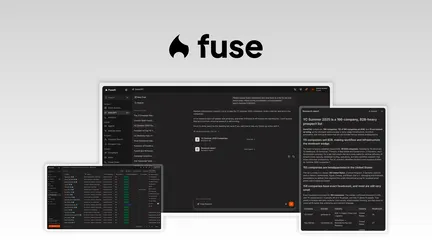
FuseAI is an AI-first outbound sales platform that brings prospecting, multi-channel outreach (email, LinkedIn, phone), and real-time buying-signal monitoring into a single workspace. It aims to reduce the tool sprawl that often plagues GTM teams by combining prospect sourcing, enrichment, sequence management, deliverability tools, and a power dialer into one agentic system. The platform is especially oriented toward small to mid-sized revenue teams and startups that want enterprise-grade infrastructure without the overhead of custom integrations or operations-heavy setups.
Key features
-
Multi-channel outreach in one place: Build and send personalized email and LinkedIn sequences, orchestrate phone outreach with a built-in power dialer, and manage replies from a single, consolidated inbox. The system supports AI-personalized messaging to maintain a natural, human tone that can still be scaled programmatically.
-
Agentic AI for prospecting and sequencing: AI agents continuously monitor intent signals (job changes, LinkedIn activity, website visits) and surface high-priority prospects. Research agents can pull context and background on accounts before outreach, and Smart Actions explain why a lead matters and recommend next steps.
-
Waterfall enrichment and data stacking: FuseAI uses waterfall enrichment across multiple providers to improve contact and company accuracy, aiming to reduce bad data and bounced emails. This reduces manual cleanup and increases the likelihood that outreach reaches the correct recipients.
-
Deliverability and warmup: Built-in email warmup and sender health tools help keep delivery rates high, reducing the risk of messages landing in spam folders. Deliverability features are integrated with sequence logic so campaigns are optimized holistically.
-
Power dialer and call workflow: The parallel power dialer automates dialing, skips dead numbers, surfaces live connections, logs call dispositions, and ties call activity back into sequences for true multi-channel motions.
-
Signal monitoring and prioritization: Users can set up signal-tracking agents to watch for ICP-specific triggers—new hires at target accounts, engagement on LinkedIn posts, or website visits—so outreach is timed to moments of heightened buying interest.
-
Consolidated inbox and reply management: All inbound replies from email, LinkedIn, and calls route into a self-organizing inbox that helps reps prioritize and ensures follow-ups don’t slip.
-
Credits-based action model and limits: The platform operates a credit model where enrichment, messages, and signal monitoring consume credits. This creates a metered usage pattern suitable for teams that want predictable consumption tied to actions rather than opaque seat-based pricing alone.
User experience and onboarding
FuseAI emphasizes fast setup—teams can connect core systems and be ready to run outbound sequences in a short time. The interface centers around campaign building and agent configuration; templates and AI-drafted messages let users iterate quickly. The inbox and sequence builder are intuitive for reps familiar with sales automation tools, and the research agents reduce time spent on manual prospect research. There are structured playbooks available to guide new users through common outreach flows.
Data, accuracy, and integrations
-
Data quality: By leveraging multiple data vendors and waterfall enrichment, FuseAI aims for high contact accuracy. The product charges only for validated, non-bouncing emails, which aligns incentives toward cleaner lists.
-
Integrations: Native integrations include major CRM and productivity tools (Google, HubSpot, Salesforce, LinkedIn, Slack), plus API access for custom connections. Bi-directional syncing helps keep pipelines current across systems.
-
Reporting and logging: Call dispositions, email activity, and signal events are logged and available for pipeline hygiene and analytics, helping revenue ops keep CRM data clean.
Limitations and considerations
-
Credit model complexity: While meters help align usage with outcomes, the credit pricing model requires teams to understand the cost-per-action dynamics (enrichment, signal monitoring, dialer minutes) and plan credit consumption accordingly.
-
Account limits: There are limits on connected LinkedIn accounts and dialer numbers that may require process changes for teams used to broad-scale LinkedIn automation or heavy dialing across many numbers.
-
Integration scope: While the platform replaces many point tools, some deep integrations or niche workflows might still require workarounds or additional configuration not fully documented in the onboarding flow.
-
Future AI features: Roadmap notes indicate some future AI model access may be gated or offered as add-ons, so teams that depend on continuous model updates should clarify licensing and access expectations.
Ideal users and use cases
FuseAI is a strong fit for:
- Small to mid-size revenue teams wanting to consolidate outbound tooling into a single system.
- Startups and SMBs that lack large revenue operations teams but need enterprise-quality data and deliverability.
- Sales managers who want to prioritize outreach using real-time signals and automate research and personalization.
- Organizations that run multi-channel outbound plays combining email, LinkedIn, and calls.
Verdict
FuseAI offers a compelling, integrated approach to modern outbound: it blends intelligent prospect discovery, reliable data enrichment, multi-channel sequence orchestration, and power dialing under one roof. The agentic AI capabilities—signal monitoring, Smart Actions, and research agents—are valuable differentiators that reduce manual lift and help teams reach prospects at the right moment. Organizations should be prepared to learn the credit model and confirm account limits relative to their scale, but for teams seeking to replace disparate tools with a single, AI-driven outbound engine, FuseAI is a robust candidate worth evaluating.